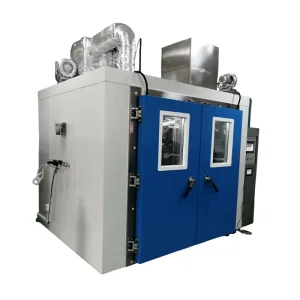
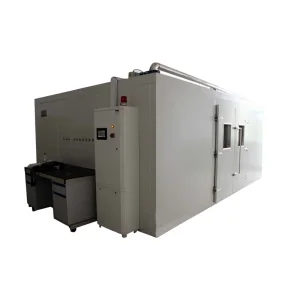
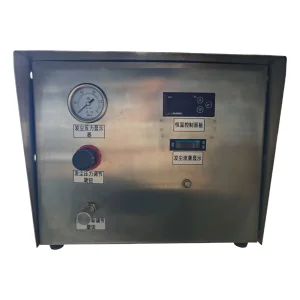
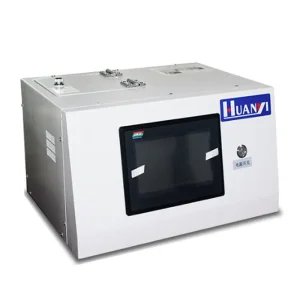
Engineered for rigorous material off-gassing assessment, compliant with ISO 16000, EN 717-1, ASTM D6007, and GB/T 18580 standards.
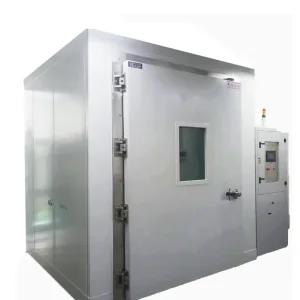
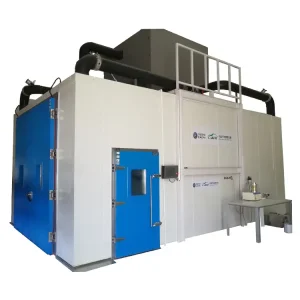
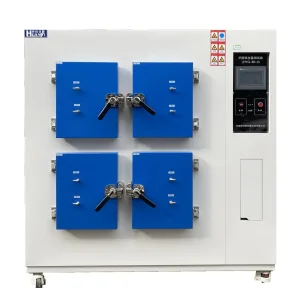
An in-depth analysis of environmental testing requirements, high-altitude barometric adjustments, and regulatory compliance in Nepal’s expanding urban economy.
The Kathmandu Valley—comprising Kathmandu Metropolitan City, Lalitpur, and Bhaktapur—is undergoing accelerated urban revitalization, high-density residential construction, and infrastructure modernizations. Consequently, local demand for composite wood panels (plywood, blockboards, MDF), interior synthetic paints, adhesives, architectural coatings, and automotive accessories has surged. However, because Kathmandu is situated in a high-altitude intermontane basin (~1,400 meters above sea level) with distinct microclimatic thermal inversions during winter months, volatile organic compounds (VOCs) and hazardous airborne aldehydes released from interior construction materials accumulate rapidly indoors, posing severe public health concerns.
To align with international trade requirements and national public health initiatives overseen by the Nepal Bureau of Standards & Metrology (NBSM) and the Ministry of Forests and Environment (MoFE), local manufacturers, testing laboratories, and academic institutions (such as Tribhuvan University Institute of Engineering) are actively upgrading their quality assurance infrastructure. Sourcing specialized VOC & Formaldehyde Emission Test Chambers designed to deliver climate-compensated precision in high-altitude environments has become an absolute necessity for local producers seeking both domestic safety compliance and global export eligibility.
Internationally, standard bodies have tightened background emission criteria. Regulatory frameworks such as the European EN 717-1 standard, ISO 16000 series, US EPA TSCA Title VI, ASTM D6007, and China's GB/T 18580 demand emission testing chambers with non-adsorptive inner surfaces, precision air exchange rates, and hermetic sealing. Traditional testing setups fail in high-altitude areas like Kathmandu due to ambient pressure drops (roughly 86 kPa vs standard 101.3 kPa at sea level), which alter mass transfer rates and gas expansion behavior during sample off-gassing.
Dongguan Huanyi Instruments Technology Co., Ltd. solves this challenge by engineering environmental test chambers equipped with automatic ambient pressure compensation algorithms, Teflon/SUS316 mirror-finish electropolished internal walls, double-stage air purification systems, and dew-point humidity control. This ensures that quantitative measurements of formaldehydes, benzene, toluene, xylene, and total volatile organic compounds (TVOC) performed in Kathmandu laboratories remain 100% comparable to test data generated at sea-level facilities anywhere in the world.
| Performance Parameter | Huanyi Advanced Emission Chamber | Conventional Standard Chamber | Kathmandu Operational Advantage |
|---|---|---|---|
| Background VOC Concentration | TVOC < 0.02 mg/m³, Formaldehyde < 0.005 mg/m³ | TVOC < 0.10 mg/m³, Formaldehyde < 0.02 mg/m³ | Prevents false positive readings in sensitive trace-analysis testing. |
| Barometric Pressure Compensation | Dynamic PID Pressure Adjuster (80 kPa – 106 kPa) | Fixed atmospheric ventilation (Uncompensated) | Eliminates measurement drift caused by Kathmandu's 1,400m altitude. |
| Interior Chamber Material | SUS316 Mirror Electropolished Stainless Steel (Ra < 0.4 µm) | Standard SUS304 Brushed Stainless Steel | Zero wall chemical adsorption; effortless decontamination between runs. |
| Air Exchange Accuracy (ACH) | Mass Flow Controller (MFC) Controlled (±1% Accuracy) | Rotameter / Manual Valve Adjustment | Ensures absolute compliance with ISO 16000-9 and EN 717-1 protocols. |
| Humidity Control Tech | Dew-point control with oil-free clean steam generation | Direct water atomization / wet sponge system | Prevents condensation droplet artifacts on sample surfaces. |
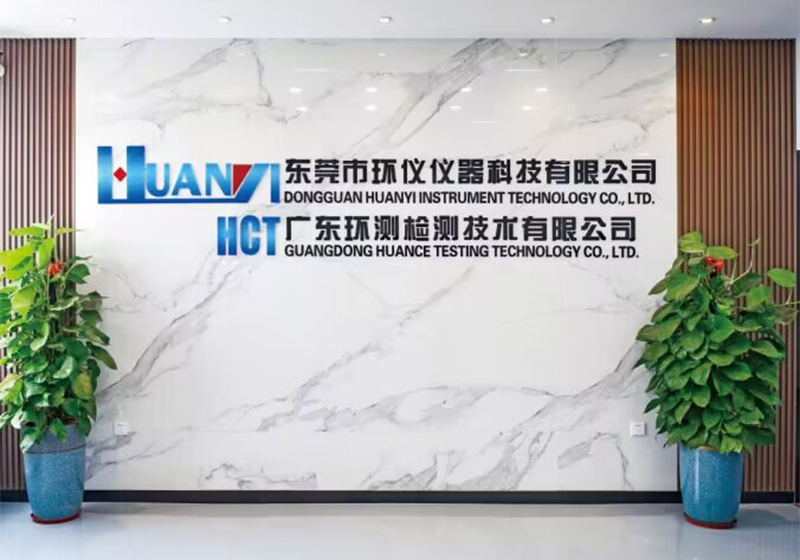
Established on March 20, 2007, operating across a 6,022 m² modern manufacturing complex. Huanyi is a certified high-tech enterprise integrating R&D, digital manufacturing, global sales, and engineering support.
Dongguan Huanyi Instruments Technology Co., Ltd. actively participated in drafting Chinese national standards and industry standards for environmental simulation test equipment (including GB5364 and GBT50325 standards). Our core operational philosophy is "Customer-Centric, Quality-Guaranteed, Honesty-Based, and Innovation-Oriented".
Through decades of focused technical advancement, Huanyi has built an elite engineering team backed by ERP-driven digital production management, automated laser-cutting sheet metal centers, and strict quality assurance checks. With over 2,500 enterprise clients worldwide, our test chambers are actively exported to Southeast Asia, Europe, North America, the Middle East, and South Asian markets including Nepal.
End-to-end quality inspection spanning raw material verification, laser fabrication, refrigeration line pressure testing, and multi-day calibration prior to dispatch.
Over 20 years of dedicated expertise in environmental test chamber technology. Capable of executing high-volume custom production managed via enterprise ERP systems.
State-of-the-art facility featuring automated CNC punching, digital sheet metal laser cutting, and lean production assembly pipelines that minimize material waste.
Certified ISO 9001:2015 quality management system. Premium grade raw components supplied by globally recognized leaders (Danfoss, Siemens, Schneider).
Tailored test environments engineered for multi-specimen screening, pretreatment conditioning, and high-accuracy gas sensor calibration.
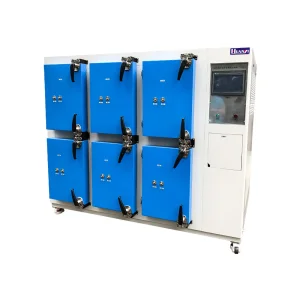
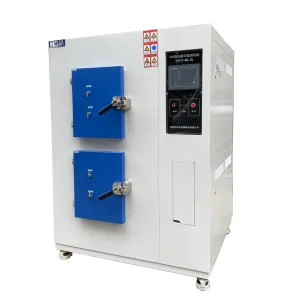
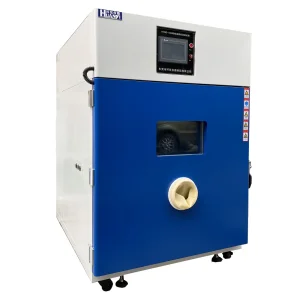
Huanyi emission chambers support diverse industrial workflows, ensuring products manufactured or imported into the Kathmandu Valley satisfy human health safety criteria.
Testing formaldehyde release rates (ppm or mg/m³) from commercial plywood, particleboards, and solid wood furniture produced in the Balaju and Patan Industrial Estates to meet EN 717-1 and ASTM D6007.
Quantifying total volatile organic compound (TVOC) off-gassing, solvent residuals, and aromatic hydrocarbons (benzene, toluene) from decorative indoor paints and timber sealants used in Kathmandu constructions.
Evaluating indoor cabin air quality (VIAQ) by measuring off-gassing from leather seats, dashboards, rubber mats, and synthetic headliners using 1m³ and walk-in sampling bag chambers.
Multi-barrel testing of polyurethane sports surfaces and rubberized running tracks installed in municipal sports complexes and schools across Bagmati Province to ensure zero toxic gas release.
Supporting environmental chemistry R&D, sensor calibration, and indoor air pollution dispersion studies at leading Nepalese academic institutions and independent inspection laboratories.
Utilizing 10m³–30m³ aerosol testing chambers to verify CADR (Clean Air Delivery Rate), particulate removal efficiencies, and chemical filtration capability under controlled humidity.
A proven record of continuous innovation, national standard participation, and international infrastructure expansion.
Explore our complete range of certified emission chambers, pretreatment cabinets, and precision gas generators.
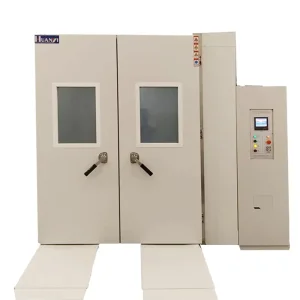
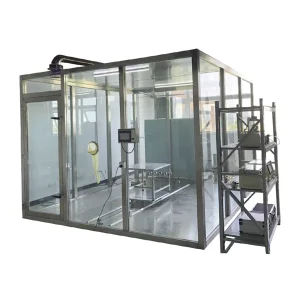
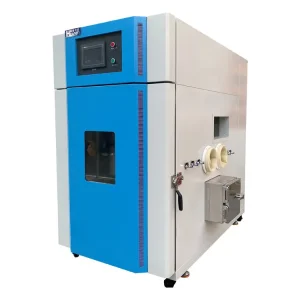
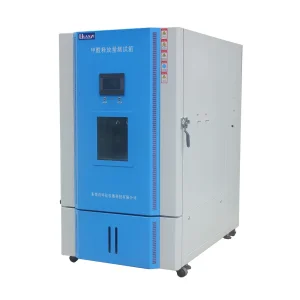
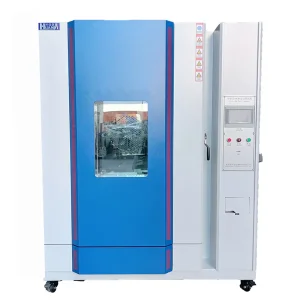
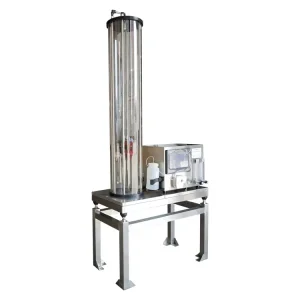
Complete peace of mind through international warranty coverage, altitude-calibrated setup, and seamless spare parts logistics across Nepal.
Every chamber destined for the Kathmandu Valley undergoes factory altitude simulation testing. Differential pressure sensors and mass flow meters are calibrated to operate flawlessly at ambient atmospheric pressures between 84 kPa and 102 kPa.
Our senior field engineers provide comprehensive site inspection, electrical configuration, pure water feed connection, and live test validation at your laboratory facility in Kathmandu, Lalitpur, or Bhaktapur.
We provide full calibration documentation traceable to international metrology standards, enabling Nepalese commercial laboratories to secure ISO 17025 accreditation and NBSM compliance effortlessly.
Driving the future of environmental testing with automated background purge cycles, real-time photoionization detection (PID), and cloud telemetry.
Huanyi’s latest chamber series features direct high-temperature sample transfer lines interfaceable with Thermal Desorption Gas Chromatography-Mass Spectrometry (TD-GC-MS) and Proton-Transfer-Reaction Mass Spectrometry (PTR-MS). This enables real-time concentration tracking of trace analytes without manual sampling bag handling.
Incorporating high-temperature thermal bake-out mode (up to 200°C chamber wall heating) paired with high-efficiency ozone catalytic destruction. The system purges residual adsorbed VOCs within 45 minutes, reducing downtime between sequential testing batches by over 60%.
Everything you need to know about purchasing, importing, and operating VOC test chambers in Nepal.
 Huanyi